
Why Some Mosquito Seasons Are Worse Than Others in West Tennessee and the Bootheel
Some summers, a yard in West Tennessee or the Missouri Bootheel feels manageable. Other summers, it's nearly unusable after 6 p.m. The difference usually isn't luck. It comes down to winter temperatures, spring rainfall, and how much standing water sits around a property once the heat sets in. Understanding what actually drives a heavy mosquito year makes it a lot easier to get ahead of one.
What Makes One Mosquito Year Worse Than the Next
Mild winters and wet springs are the two biggest drivers behind a heavier mosquito year. Mosquito eggs and larvae survive cold weather better when winter temperatures don't dip low enough for a hard, sustained freeze, so more of the previous year's population makes it through to breed again in spring. Heavy spring rain adds to that: standing water collects in low spots, ditches, and clogged gutters, and a single female mosquito can lay a new batch of eggs in that water every few days. When both conditions line up in the same year, populations build faster and stay higher for longer.
Peak Season Runs Longer Than Most Homeowners Expect
Mosquito activity across West Tennessee and the Missouri Bootheel typically builds through late spring, holds at its highest from June through August, and doesn't fully wind down until the first hard frost, which can land anywhere from October to as late as November in milder falls. In the Bootheel specifically, disease risk tends to run higher later in the season rather than tapering off with the summer, so late-season mosquito pressure deserves the same attention as the early rush in June.
The Bite Is the Least of It
Most mosquito bites in West Tennessee and Southeast Missouri are just annoying, but West Nile virus is an ongoing risk in both states every season, and mosquitoes are one of several yard pests that outdoor pest control is built to handle alongside fleas, ticks, and armyworms. It's the most common mosquito-borne illness tracked in the region, spread mainly by the southern house mosquito, a species that prefers larger standing water sources like ditches and storm drains rather than small containers. Most people bitten by an infected mosquito never develop symptoms, but a portion will experience fever, body aches, and fatigue, and older adults and people with weaker immune systems face a higher risk of more serious complications. Reducing mosquito numbers around a property is a direct way to lower that exposure, not just a comfort upgrade.
Myth: Bug Zappers and Citronella Actually Clear Out a Yard
They don't, and relying on them is a common reason a yard stays buggy all season despite the effort. Bug zappers are drawn to light and attract far more harmless insects than mosquitoes, which mostly key in on body heat and carbon dioxide instead. Citronella candles create a small pocket of scent that a breeze scatters within a few feet, so they do little for anyone sitting more than a couple feet away. Both products can make a patio feel like something's being done, but neither reduces the mosquito population breeding on the property. What actually works is removing where they breed and treating where they rest.
What Actually Cuts Mosquito Numbers
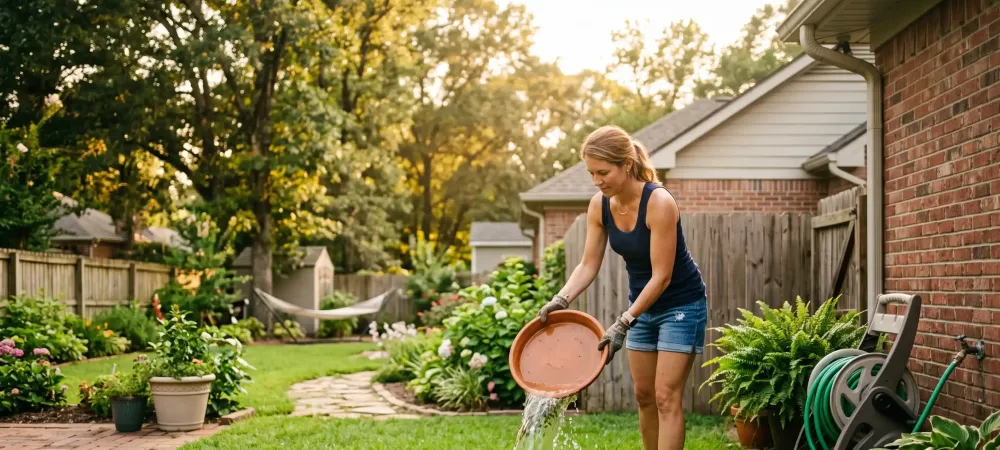
Eliminating standing water is the single most effective thing a homeowner can do, and it takes less than it sounds like. Mosquitoes only need a bottle cap's worth of standing water to lay eggs, so the usual culprits are clogged gutters, pet water bowls, kiddie pools, plant saucers, tarps, and low spots in the yard that hold water after rain. Walking the property once a week and dumping anything holding water, then trimming back overgrown shrubs and tall grass where adult mosquitoes rest during the day, cuts the population at the source.
Source reduction only goes so far once populations are already elevated, which is where a professional mosquito control barrier treatment earns its place. 4-Evergreen Lawn Care applies targeted treatments to the vegetation and resting areas where adult mosquitoes hide during the day, not just a general yard spray, which knocks down the biting population beyond what removing standing water alone can achieve. Pairing both is the difference between a yard that's usable in the evening all season and one that isn't.
A Simple Weekly Checklist
- Empty anything holding standing water: gutters, pet bowls, saucers, buckets, and low spots in the lawn.
- Trim back dense shrubs, ivy, and tall grass where adult mosquitoes rest during daylight hours.
- Check weekly, not once a season. New eggs can hatch within a week of the last rain.
- Talk to 4-Evergreen Lawn Care about a barrier treatment if source reduction alone isn't keeping evenings usable.
Ready to stop planning evenings around mosquito activity? Request a free mosquito control estimate or call 731-264-0088 to talk through what's driving the pressure in your specific yard, whether that's a yard in Jackson or anywhere else across West Tennessee and the Bootheel.