
West Tennessee Spring Lawn Care: Bermuda and Zoysia Timing
Spring lawn care in West Tennessee is a sequence, and the order matters. Bermuda and Zoysia emerge from winter dormancy on their own timelines. Push too early, and you waste product. Wait too long, and crabgrass wins. This guide covers the three moves that matter: pre-emergent timing, when to fertilize, and when to aerate.
Quick Answer
Apply your first spring pre-emergent when soil temperature at a 2-inch depth holds at 55°F for several consecutive days, typically mid-March in West Tennessee. Wait until Bermuda and Zoysia are fully green and actively growing (usually late April to May) before applying granular fertilizer. Aerate after full green-up, from late April through early June, while the turf can recover quickly.
Key Takeaways
- Pre-emergent timing is driven by soil temperature, not the calendar. Watch for that 55°F threshold and use forsythia blooms as a natural visual cue.
- Fertilizing Bermuda and Zoysia before they fully green up wastes nitrogen and can stress dormant turf.
- West Tennessee clay soils compact quickly, making late April to early June the prime aeration window for warm-season lawns.
Know Your Grass Type
Bermuda and Zoysia are warm-season grasses. Unlike fescue, they stay dormant through early spring and don't start growing until soil warms up. That's actually good news for your spring timeline. While the grass is still dormant, you can apply pre-emergent without risking turf damage. The key is matching your applications to soil temperature, not the calendar.
Step 1: Pre-Emergent Timing
Pre-emergent herbicide is your biggest spring move. Apply it too late and crabgrass has already germinated. Apply too early and you waste product. The timing trigger is soil temperature, not the calendar.
According to UT Extension, "Apply PRE herbicide when soil temperature averages 55°F at a 2-inch depth for several consecutive days. Forsythia plants will begin to produce yellow blooms at these soil temperatures" (University of Tennessee Extension, PB 1903). In West Tennessee, that typically means mid-to-late March. Watch for forsythia to bloom in your neighborhood. When it does, your soil is ready.
Crabgrass germinates in early April, so you have a short window. Look for products with dithiopyr, pendimethalin, or prodiamine. Apply a second dose 6 to 8 weeks later for season-long control.
Step 2: Fertilization
Wait until your grass is 50 percent green and actively growing before fertilizing. If you apply fertilizer to dormant or semi-dormant turf, you're feeding weeds and soil microbes, not your lawn. In West Tennessee, that typically means late April to early May.
When the time comes, use a product with at least 30 percent slow-release nitrogen. Slow-release feeds the lawn gradually over weeks instead of creating a flush of growth that burns off in the heat. If you have Zoysia, use 25 percent less product than you would for Bermuda. Zoysia is lower-maintenance, and over-fertilizing encourages thatch.
Step 3: Aeration in Clay Soil
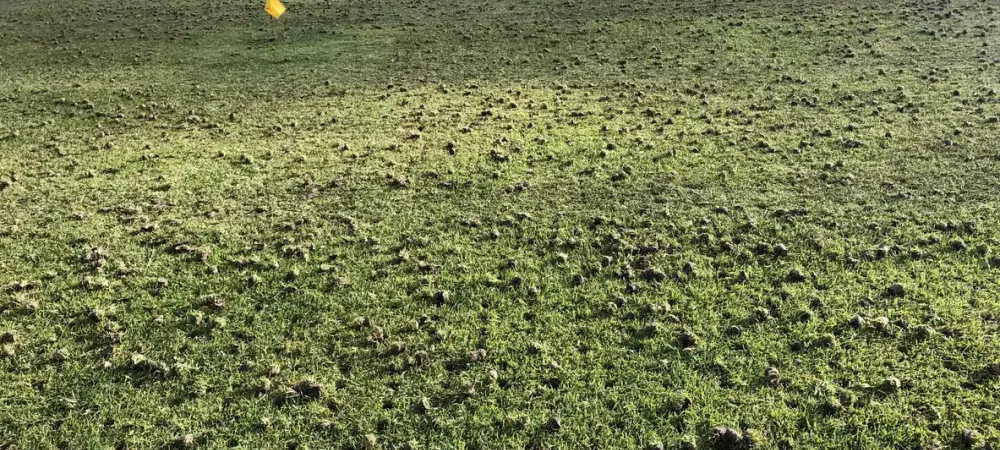
West Tennessee's clay soils compact easily. If water pools on your lawn instead of soaking in, aeration can help. The best time to aerate Bermuda and Zoysia is late April through early June, when they're actively growing and can recover quickly.
Aerate when the soil is damp but not wet. If your lawn gets heavy foot traffic or hasn't been aerated in years, you may need two applications spaced 6 to 8 weeks apart. Our aeration and overseeding services are built around the exact windows your lawn needs.
Green-Up Acceleration Tip
If you want your lawn to green up faster, mow early and bag the clippings. That dead biomass on the surface insulates the soil and slows warming. Removing it lets sunlight warm the ground faster. Avoid applying post-emergent weed killer during spring green-up. Your dormant grass is fragile right now.
Quick Tips
- Get a soil test at soillab.tennessee.edu so you know what nutrients your lawn actually needs.
- Sharpen mower blades before spring. Dull blades shred grass and invite disease.
- Never remove more than one-third of the blade per mow.
- If your lawn stays soggy after rain, aeration can help with drainage and prevent disease.
When to Call a Pro
If your Bermuda or Zoysia lawn shows large patches of brown or yellow that don't respond to watering, you likely have a disease issue that needs professional treatment. Heavy weed pressure also warrants a two-application pre-emergent program managed by someone who knows your soil and lawn type. Our lawn care pros and surrounding communities handle the full spring sequence, so the timing is right.
Get Started This Spring
Watch for forsythia to bloom, apply pre-emergent at the 55°F soil mark, fertilize once it's green, and aerate in late April or May. That's the sequence. 4-Evergreen Lawn Care has been managing West Tennessee lawns for 25 years. We know the timing. Call us at 731-264-0088 or get a free quote to lock in your spring program.
Sources
- University of Tennessee Extension. "2025 Lawn Maintenance Calendar." PB 1903. UT Institute of Agriculture, January 2025, uthort.tennessee.edu/wp-content/uploads/sites/228/2025/01/PB1903-2025.pdf.
- University of Tennessee Institute of Agriculture. "Bermudagrass Science and Management." PB 1632. UTIA Publications, utia.tennessee.edu/publications/wp-content/uploads/sites/269/2023/10/PB1632.pdf.
- University of Tennessee Crops Extension. "Lawn, Warm Season (Bermudagrass, Zoysia)." UT Fertilizer Recommendations, utcrops.com/soil/home-vegetable-garden-and-lawn/lawn-warm-season/.