
Lawn Disease Identification Guide
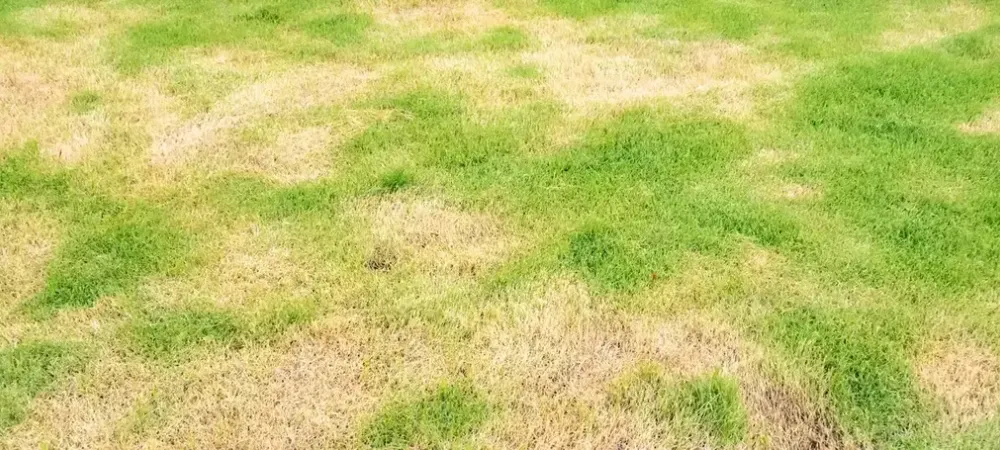
A healthy lawn doesn’t just depend on watering and mowing. In many cases, disease is the hidden factor behind thinning grass, discoloration, or patchy areas that don’t respond to fertilizer. Lawns across West Tennessee and Southeast Missouri are especially prone to disease because of warm temperatures, seasonal humidity, and compacted soils.
Knowing what to look for is the first step toward stopping damage early.
Below are the most common lawn diseases homeowners encounter and how to identify them before they spread.
Brown Patch
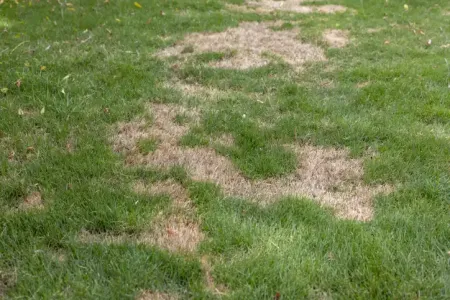
Brown patch is one of the most common lawn diseases in this region, especially during warmer months.
What it looks like:
- Circular or irregular brown patches that can range from a few inches to several feet wide.
- Grass within the patch may appear wilted or matted.
- A dark, smoky ring may be visible along the outer edge during humid mornings.
When it shows up:
- Late spring through early fall.
- Periods of high humidity combined with warm nighttime temperatures.
Why it happens:
- Excess moisture.
- Overwatering or poor drainage.
- Excess nitrogen during warm weather.
Dollar Spot
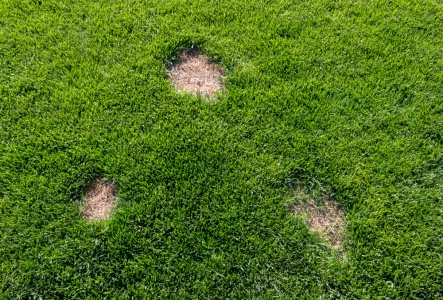
Dollar spot often appears suddenly and spreads quickly if left untreated.
What it looks like:
- Small, straw-colored spots roughly the size of a silver dollar.
- Spots may merge into larger damaged areas over time.
- Grass blades can develop lesions with reddish or brown borders.
When it shows up:
- Late spring through fall.
- Dry conditions followed by heavy dew or light watering.
Why it happens:
- Low nitrogen levels.
- Inconsistent moisture.
- Heavy morning dew.
Red Thread
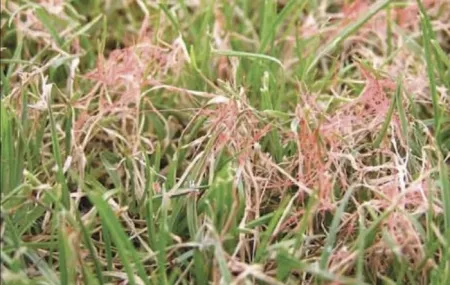
Red thread is more common in lawns that are under stress or lacking nutrients.
What it looks like:
- Pinkish or reddish threads extending from grass blades.
- Patches of thinning or faded grass.
- Damage often appears worse from a distance than up close.
When it shows up:
- Spring and fall.
- Cool, wet conditions.
Why it happens:
- Low nitrogen.
- Prolonged moisture on grass blades.
- Poor overall turf health.
Leaf Spot and Melting Out
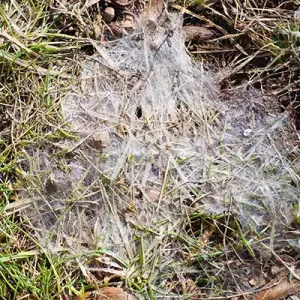
This disease starts small but can cause widespread thinning if ignored.
What it looks like:
- Small dark spots on individual grass blades.
- Yellowing followed by thinning or bare patches.
- Grass may appear weak or easily pulled from the soil.
When it shows up:
- Spring and early summer.
- Periods of fluctuating moisture and temperature.
Why it happens:
- Stress from drought or overwatering.
- Mowing too low.
- Poor air circulation.
Pythium Blight
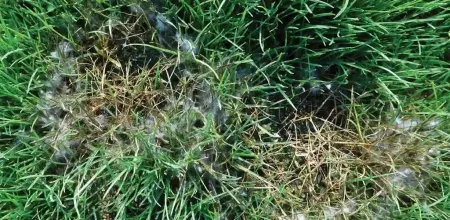
Pythium blight spreads rapidly and can cause severe damage in a short time.
What it looks like:
- Greasy, water-soaked patches.
- Gray or white cotton-like growth early in the morning.
- Rapid collapse of grass blades.
When it shows up:
- Hot, humid weather.
- Poorly drained areas.
Why it happens:
- Excess moisture.
- Compacted soil.
- Poor airflow.
How to Tell Disease From Other Lawn Problems
Lawn disease is often mistaken for drought stress, insect damage, or nutrient deficiencies. A few clues that point toward disease include:
- Damage spreading in circular or irregular patterns.
- Grass discoloration that doesn’t improve with watering.
- Visible lesions, spots, or fungal growth on blades.
- Problems appearing during warm, humid periods.
If symptoms worsen despite basic care, disease is likely the cause.
Why Early Identification Matters
Lawn diseases don’t usually fix themselves. Once they begin spreading, damage can accelerate quickly, leading to thinning turf and long recovery times. Early identification allows treatments to be applied before permanent damage occurs.
Healthy mowing practices, proper watering, balanced fertilization, and timely disease control all play a role in keeping lawns resilient.
Professional Help Makes the Difference
Diagnosing lawn disease correctly is critical. Many diseases share similar symptoms, and applying the wrong treatment can make the problem worse.
Professional lawn care focuses on:
- Accurate disease identification.
- Targeted treatments based on current conditions.
- Preventative strategies that reduce future outbreaks.
- Improving overall turf health to resist disease pressure.
If your lawn is showing signs of decline and basic maintenance isn’t helping, a professional evaluation can save time, money, and frustration. Contact our team today for a free inspection and a customized treatment plan for your lawn!